Introduction
Deviled eggs are a classic appetizer, loved for their creamy texture and savory flavor. But what if we could take this beloved dish and infuse it with a bold Korean twist? Enter the Korean Gochujang Deviled Eggs, a unique and captivating variation that will impress your guests.
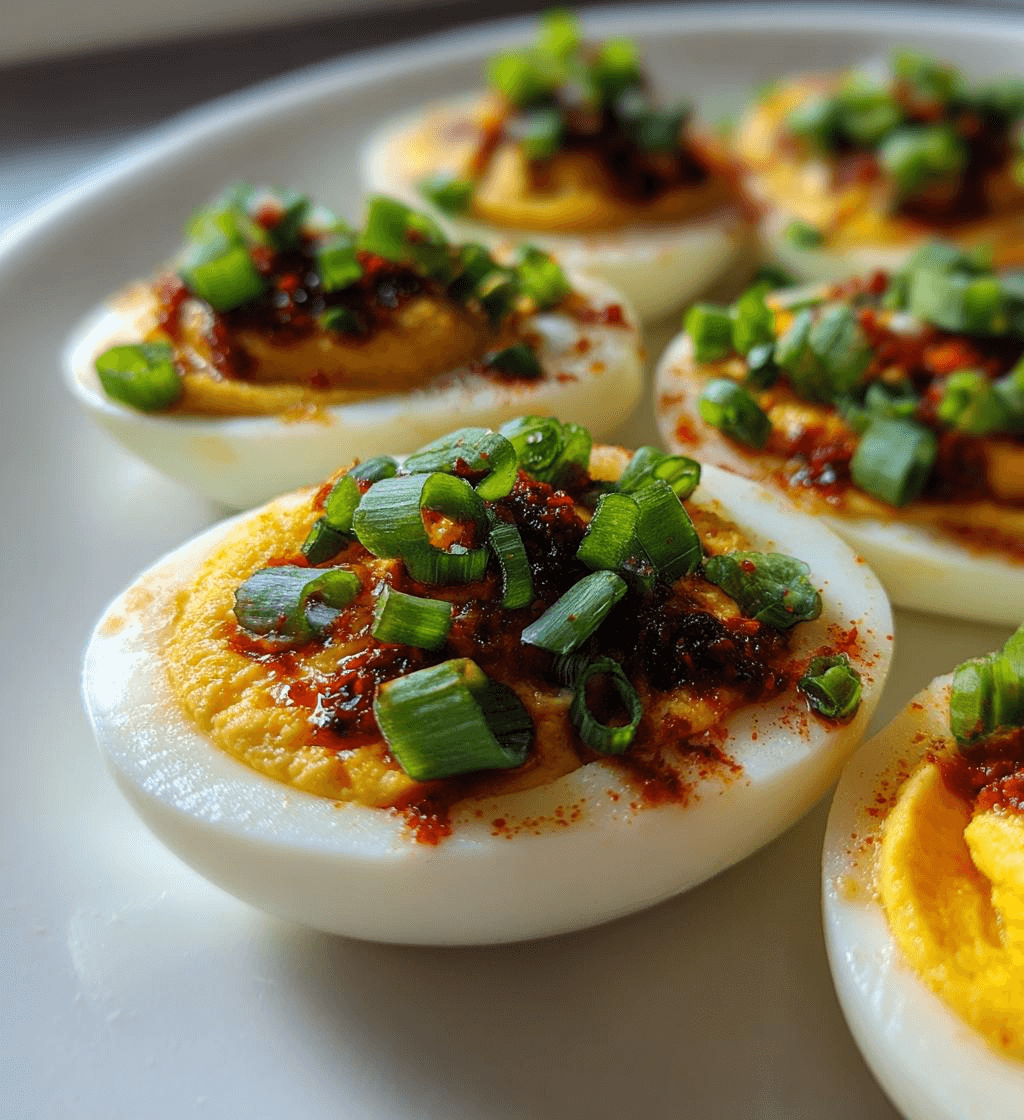
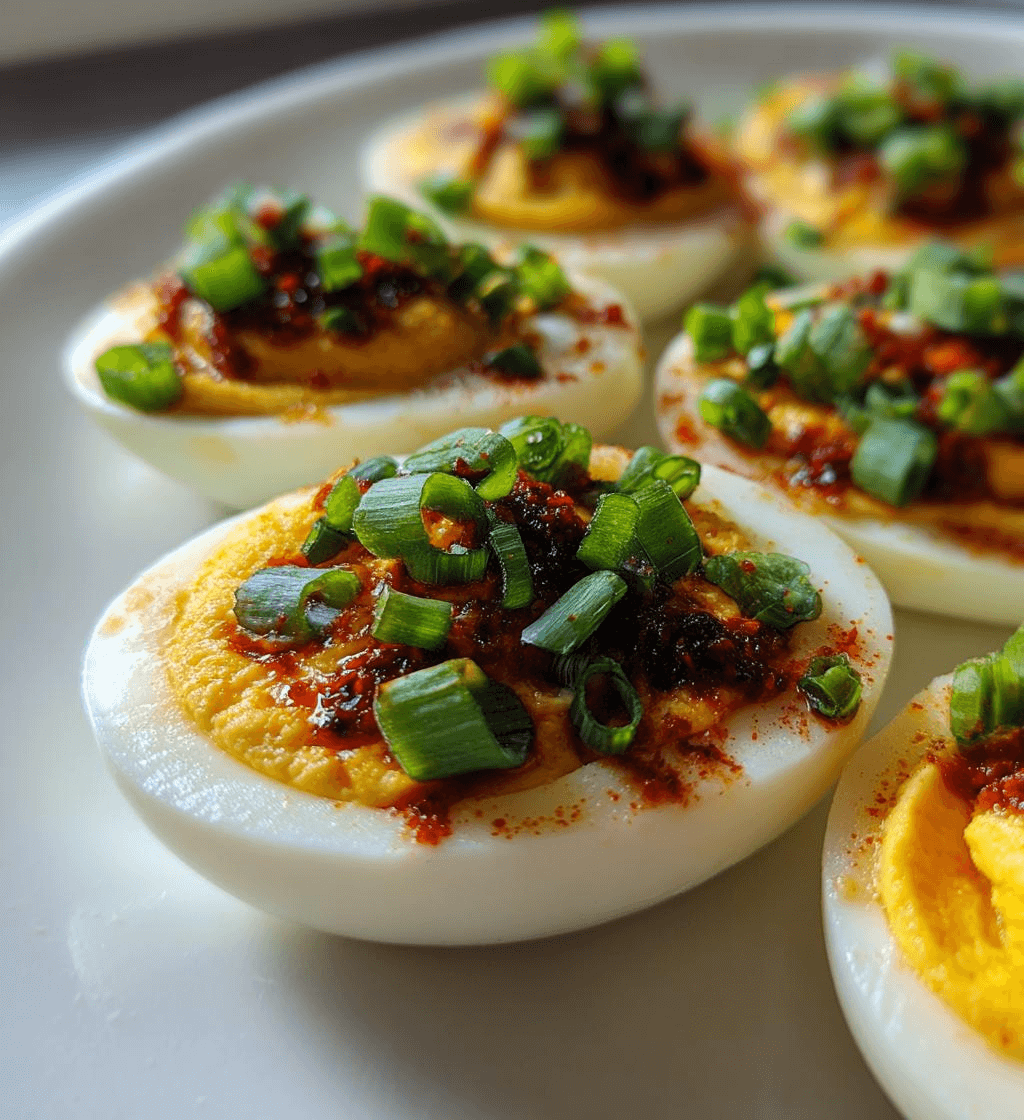
By incorporating gochujang, a fermented Korean red chili paste, these deviled eggs acquire a spicy richness that elevates the flavor profile. Topped with a sprinkle of sesame seeds and scallions, they present not just a tasty morsel but also a feast for the eyes.
Ingredients
- 6 large eggs
Eggs are the main ingredient providing the creamy base for the deviled filling. They also add protein, making the dish satisfying. - 3 tablespoons mayonnaise
Mayonnaise adds creaminess to the filling, making it rich and smooth. It also acts as a binding agent for the other ingredients. - 1 tablespoon Korean gochujang
Gochujang is a spicy, fermented red chili paste that provides a savory kick and deep flavor, distinguishing these deviled eggs from the classic version. - 1 teaspoon rice vinegar
Rice vinegar enhances the overall flavor balance with its mild acidity. This brightness cuts through the richness of the eggs and mayonnaise. - 1 teaspoon Dijon mustard
Dijon mustard adds a zesty kick that complements the gochujang, contributing depth and complexity to the filling. - Salt, to taste
Salt is essential for flavor enhancement, helping to bring out the richness of the eggs and harmonize the other flavors. - Fresh chives or scallions for garnish
Chopped chives or scallions provide a fresh, herbal note that elevates the dish visually and flavor-wise, adding color and crunch. - Toasted sesame seeds for garnish
Toasted sesame seeds provide a nutty flavor and crunchy texture, enhancing the overall experience of the deviled eggs.
Directions & Preparation
Step 1: Hard boil the eggs by placing them in a pot and covering them with cold water.
This step is crucial for cooking the eggs evenly. Start by bringing the water to a boil, then reduce the heat and simmer for about 9-12 minutes for perfectly hard-boiled eggs.
Step 2: Remove the eggs from the pot and place them in an ice bath to cool.
Cooling the eggs quickly helps prevent the yolks from becoming overcooked, which would give them a grayish-green ring. An ice bath also makes peeling easier.
Step 3: Once cooled, peel the eggs and slice them in half lengthwise.
Peeling the eggs can be tricky; cracking them slightly before peeling can help. Cutting them lengthwise allows easy access to the yolks for mixing.
Step 4: Scoop out the yolks into a bowl and mash them with mayonnaise, gochujang, rice vinegar, Dijon mustard, and salt until smooth.
Mashing the yolks ensures a creamy filling. Adjust the level of gochujang based on your spice preference; remember that it’s the star player here.
Step 5: Taste the mixture and adjust seasoning if necessary.
At this stage, you can tweak the flavors. A little more mustard can add zing, while more gochujang will intensify the heat. This step ensures the filling meets your flavor preferences.
Step 6: Spoon or pipe the mixture back into the egg whites.
Piping the filling creates a professional presentation. If you don’t have a piping bag, using a spoon works just fine, especially for a rustic finish.
Step 7: Garnish with chopped chives or scallions and a sprinkle of toasted sesame seeds.
Garnishing not only enhances the visual appeal but also adds layers of fresh flavor. The sesame seeds provide crunch and a nutty depth, rounding out the dish.
Step 8: Serve immediately or chill for up to an hour before serving.
Serving these eggs fresh allows the flavors to shine. Chilling them slightly can improve texture but aim to serve them within an hour to maintain the freshness.

Elevating Classic Flavors with Gochujang
Incorporating gochujang into deviled eggs introduces a delightful umami richness that’s often missing in traditional recipes. The fermented chili paste not only elevates the dish with its complex flavor but also brings heat that tantalizes the taste buds. This twist transforms a simple snack into a show-stopping appetizer that sparks conversations at your gathering.
Perfect Pairings: Match the Side Dishes
When serving these Korean-inspired deviled eggs, consider complementing them with other Korean dishes, such as kimchi or pickled vegetables. These sides share similar flavor profiles and will create a cohesive meal that embraces the spirit of Korean cuisine. Additionally, the refreshing crunch of cucumber or radish salad can balance the richness of the eggs.
Crafting the Perfect Egg Consistency
Achieving the right texture in deviled eggs hinges on careful cooking. Overcooking can lead to a grainy filling, while undercooking results in a soft yolk. To perfect your technique, keep your cooking times consistent, and use an ice bath immediately after boiling. This practice will yield creamy and luscious yolks that blend beautifully with the other ingredients.
FAQs
What should I do if the egg yolk mixture is too thick?
If your yolk mixture is too thick, add a little more mayonnaise or a splash of rice vinegar to reach your desired consistency.
Can I adjust the heat level of the filling?
Absolutely! You can decrease the amount of gochujang or substitute it with a milder chili paste if you prefer a less spicy deviled egg.
What can I do if my eggs are hard to peel?
If your eggs are hard to peel, try peeling them under running water, as this can help loosen the membrane and make the process easier.
Is gochujang really necessary in this recipe?
While gochujang adds a unique flavor, you can experiment with other spicy condiments, though the taste will differ from the original intention.
Can I make these deviled eggs vegan?
You can't replace the eggs in traditional deviled eggs, but you can find plant-based substitutes to make a similar creamy filling using ingredients like silken tofu.
What if I don't have sesame seeds for garnish?
If you don't have sesame seeds, try using finely chopped nuts, such as peanuts or almonds, for a similar crunch and flavor enhancement.
Conclusion
Korean Gochujang Deviled Eggs offer an exciting twist on a classic appetizer, bringing depth and spice that are sure to impress. By incorporating rich ingredients and thoughtful garnishes, you create a dish that serves not just as nourishment but also as an experience.
Next time you're planning a gathering or simply want to treat yourself to something special, remember the bold flavors of these deviled eggs. They promise to be a hit, bringing joy and a hint of adventure to your dining table.
Recipe Card
Korean Gochujang Deviled Eggs with a Bold Twist
Ingredients
Method
- Hard boil the eggs by placing them in a pot and covering them with cold water.
- Remove the eggs from the pot and place them in an ice bath to cool.
- Once cooled, peel the eggs and slice them in half lengthwise.
- Scoop out the yolks into a bowl and mash them with mayonnaise, gochujang, rice vinegar, Dijon mustard, and salt until smooth.
- Taste the mixture and adjust seasoning if necessary.
- Spoon or pipe the mixture back into the egg whites.
- Garnish with chopped chives or scallions and a sprinkle of toasted sesame seeds.
- Serve immediately or chill for up to an hour before serving.
Notes
Additional serving suggestions: pair with a crisp salad, garlic bread, or roasted seasonal vegetables for balance.
For make-ahead, prep components separately and assemble just before heating to preserve texture.
Taste and adjust with acid (lemon/vinegar) and salt right at the end to wake up flavors.