Introduction
Mastering the art of the perfect crêpe is a culinary rite of passage, and JB’s Crêpes provide the definitive blueprint. This recipe demystifies the process, delivering a versatile, foolproof batter that yields impossibly thin, tender, and lacy pancakes every single time. Whether you’re dreaming of a classic lemon-sugar breakfast, an elegant dessert filled with berries and cream, or a hearty savory galette, this single batter is your key.
What sets JB’s Crêpes apart is its meticulous balance of ingredients and a crucial resting period, ensuring a seamless, lump-free batter that cooks without tearing. This isn’t just a recipe; it’s a master technique for creating a classic French crêpe that is equally at home in a street food stall or a fine dining restaurant. With a little practice, you’ll be flipping with confidence and unlocking a world of delicious possibilities.
Ingredients List
This recipe makes about 12-14 (8-inch) crêpes. Use a kitchen scale for precision.
- 1 cup (125g) all-purpose flour
- 2 large eggs, at room temperature
- 1 ¼ cups (300ml) whole milk, at room temperature
- ¼ cup (60ml) water
- 3 tablespoons (42g) unsalted butter, melted and cooled, plus more for the pan
- 2 tablespoons granulated sugar (omit for strictly savory crêpes)
- ¼ teaspoon kosher salt
- ½ teaspoon pure vanilla extract (omit for savory)
Equipment Needed
- Blender or whisk and large mixing bowl
- 8-inch or 10-inch non-stick skillet or crêpe pan
- Flat spatula (optional, for flipping)
- Ladle or ¼-cup measuring cup
- Pastry brush (optional)


Step-by-Step Instructions
Part 1: Making and Resting the Batter
Step 1: Combine Ingredients
For the smoothest result, use a blender. Add the flour, eggs, milk, water, melted butter, sugar, salt, and vanilla (if using). Blend on high speed for 20-30 seconds until completely smooth, stopping to scrape down the sides if needed. The consistency should be like heavy cream.
Step 2: The Crucial Rest
Pour the batter into a pourable container or bowl, cover, and let it rest at room temperature for at least 30 minutes, or ideally in the refrigerator for 1-2 hours. This essential step for perfect crêpes allows the flour to fully hydrate and the gluten to relax, which is the secret to tender, non-rubbery crêpes that won’t tear.
Part 2: Cooking Your First Crêpe
Step 3: Heat the Pan
Place your non-stick skillet over medium heat. Let it get properly hot for a minute or two. Test by sprinkling a few drops of water in the pan; they should sizzle and dance.
Step 4: Butter and Pour
Using a pastry brush or a paper towel dipped in melted butter, lightly coat the surface of the hot pan. Give the rested batter a gentle stir. Pour a scant ¼ cup of batter into the center of the pan (for an 8-inch pan) and immediately lift the pan off the burner.
Step 5: Swirl to Coat
Quickly tilt and rotate the pan in a circular motion so the batter spreads outwards in a thin, even layer across the entire bottom. This should happen within 2-3 seconds. Return the pan to the heat.
Step 6: Cook and Flip
Cook for 45-60 seconds. The edges will begin to lift and turn lightly golden, and the top surface will look dry and set. Slide a thin spatula underneath to loosen the edges, then, with confidence, either use the spatula or give the pan a quick flick of the wrist to flip the crêpe.
Cook on the second side for just 20-30 seconds until lightly spotted. Transfer to a plate.
Part 3: Mastering the Batch
Step 7: Adjust and Continue
The first crêpe is often a “test” for heat and batter amount. Adjust as needed: if it’s too thick, use less batter or swirl faster; if it tears, the pan may be too hot or the batter may need another tablespoon of liquid. There is no need to butter the pan for every single crêpe; do it every 2-3 crêpes or if they start to stick.
Step 8: Stack and Keep Warm
Stack cooked crêpes on a plate, with the more attractive side (the first side cooked) facing down. You can cover them with a clean kitchen towel to keep them warm and pliable while you finish the batch.
Tips and Substitutions for Crepe Mastery
- Pan Choice: A true crêpe pan has low, sloped sides, but a quality non-stick skillet works perfectly.
- Batter Consistency: The batter should coat the back of a spoon. If it seems too thick after resting, thin it with a tablespoon of milk or water. It’s better to be a touch too thin than too thick.
- Dairy-Free/Gluten-Free: Use a 1:1 gluten-free flour blend. Substitute milk with oat milk or almond milk. The texture will vary slightly but will still work.
- The Flip: If you’re nervous about the wrist-flick flip, use a thin, flexible spatula. It’s a completely valid method.
- Serving Suggestions for Sweet Crêpes:
- Classic: A squeeze of fresh lemon juice and a sprinkle of granulated sugar.
- Decadent: Nutella and sliced bananas or strawberries.
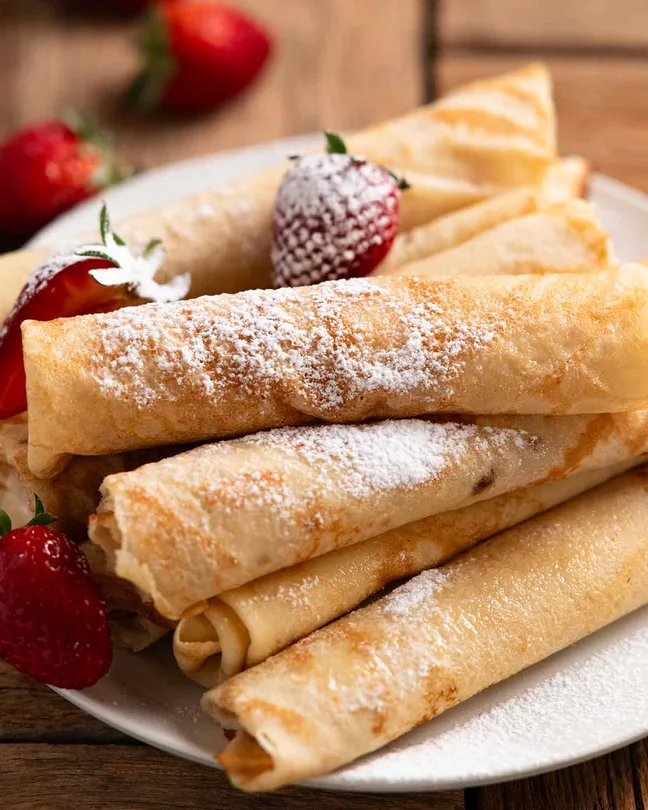
- Elegant: Sweetened whipped cream and mixed berries.
- Serving Suggestions for Savory Crêpes (Galettes):
- Complete Meal: Sautéed mushrooms, Gruyère cheese, and a fried egg.
- Simple & Classic: Ham and Emmental cheese.
- Gourmet: Smoked salmon, crème fraîche, and dill.
- Make-Ahead & Storage: The batter can be made and refrigerated for up to 48 hours—the flavor improves. Cooked crêpes can be stacked, cooled, wrapped tightly in plastic, and refrigerated for 3 days or frozen for 2 months. Separate layers with parchment paper for easy use.

Nutritional Information
Per crepe (based on 14 crêpes from the recipe):
- Calories: ~85 kcal
- Total Fat: 4g
- Saturated Fat: 2g
- Cholesterol: 35mg
- Sodium: 65mg
- Total Carbohydrates: 10g
- Dietary Fiber: 0g
- Sugars: 2g
- Protein: 3g
Table of Contents
Table of Contents
Conclusion
JB’s Crêpes are more than a recipe; they are a foundational skill. This method teaches you to read the batter and the pan, building the intuition needed for flawless results. The initial test crêpe is not a failure but a crucial step in dialing in your technique. Once mastered, you have an endlessly adaptable canvas for any meal.
Embrace the process. The rhythm of pour, swirl, flip, and stack is a joyful, meditative kitchen practice. With this reliable recipe in hand, you are equipped to bring a touch of French café elegance to your own kitchen, any time you wish.
PrintIncredible JB’s Crêpes: The 30-Minute Foolproof Recipe for Sweet & Savory

Master crêpes with JB’s ultimate recipe. Our foolproof batter makes perfect sweet or savory French crêpes every time. Easy steps for beginners & pros.
Ingredients
-
1 cup (125g) all-purpose flour
-
2 large eggs, at room temperature
-
1 ¼ cups (300ml) whole milk, at room temperature
-
¼ cup (60ml) water
-
3 tablespoons (42g) unsalted butter, melted and cooled, plus more for the pan
-
2 tablespoons granulated sugar (omit for strictly savory crêpes)
-
¼ teaspoon kosher salt
-
½ teaspoon pure vanilla extract (omit for savory)
Equipment Needed
-
Blender or whisk and large mixing bowl
-
8-inch or 10-inch non-stick skillet or crêpe pan
-
Flat spatula (optional, for flipping)
-
Ladle or ¼-cup measuring cup
-
Pastry brush (optional)
Instructions
Step 1: Combine Ingredients
For the smoothest result, use a blender. Add the flour, eggs, milk, water, melted butter, sugar, salt, and vanilla (if using). Blend on high speed for 20-30 seconds until completely smooth, stopping to scrape down the sides if needed. The consistency should be like heavy cream.
Step 2: The Crucial Rest
Pour the batter into a pourable container or bowl, cover, and let it rest at room temperature for at least 30 minutes, or ideally in the refrigerator for 1-2 hours. This essential step for perfect crêpes allows the flour to fully hydrate and the gluten to relax, which is the secret to tender, non-rubbery crêpes that won’t tear.
Part 2: Cooking Your First Crêpe
Step 3: Heat the Pan
Place your non-stick skillet over medium heat. Let it get properly hot for a minute or two. Test by sprinkling a few drops of water in the pan; they should sizzle and dance.
Step 4: Butter and Pour
Using a pastry brush or a paper towel dipped in melted butter, lightly coat the surface of the hot pan. Give the rested batter a gentle stir. Pour a scant ¼ cup of batter into the center of the pan (for an 8-inch pan) and immediately lift the pan off the burner.
Step 5: Swirl to Coat
Quickly tilt and rotate the pan in a circular motion so the batter spreads outwards in a thin, even layer across the entire bottom. This should happen within 2-3 seconds. Return the pan to the heat.
Step 6: Cook and Flip
Cook for 45-60 seconds. The edges will begin to lift and turn lightly golden, and the top surface will look dry and set. Slide a thin spatula underneath to loosen the edges, then, with confidence, either use the spatula or give the pan a quick flick of the wrist to flip the crêpe.
Cook on the second side for just 20-30 seconds until lightly spotted. Transfer to a plate.
Part 3: Mastering the Batch
Step 7: Adjust and Continue
The first crêpe is often a “test” for heat and batter amount. Adjust as needed: if it’s too thick, use less batter or swirl faster; if it tears, the pan may be too hot or the batter may need another tablespoon of liquid. There is no need to butter the pan for every single crêpe; do it every 2-3 crêpes or if they start to stick.
Step 8: Stack and Keep Warm
Stack cooked crêpes on a plate, with the more attractive side (the first side cooked) facing down. You can cover them with a clean kitchen towel to keep them warm and pliable while you finish the batch.