Introduction
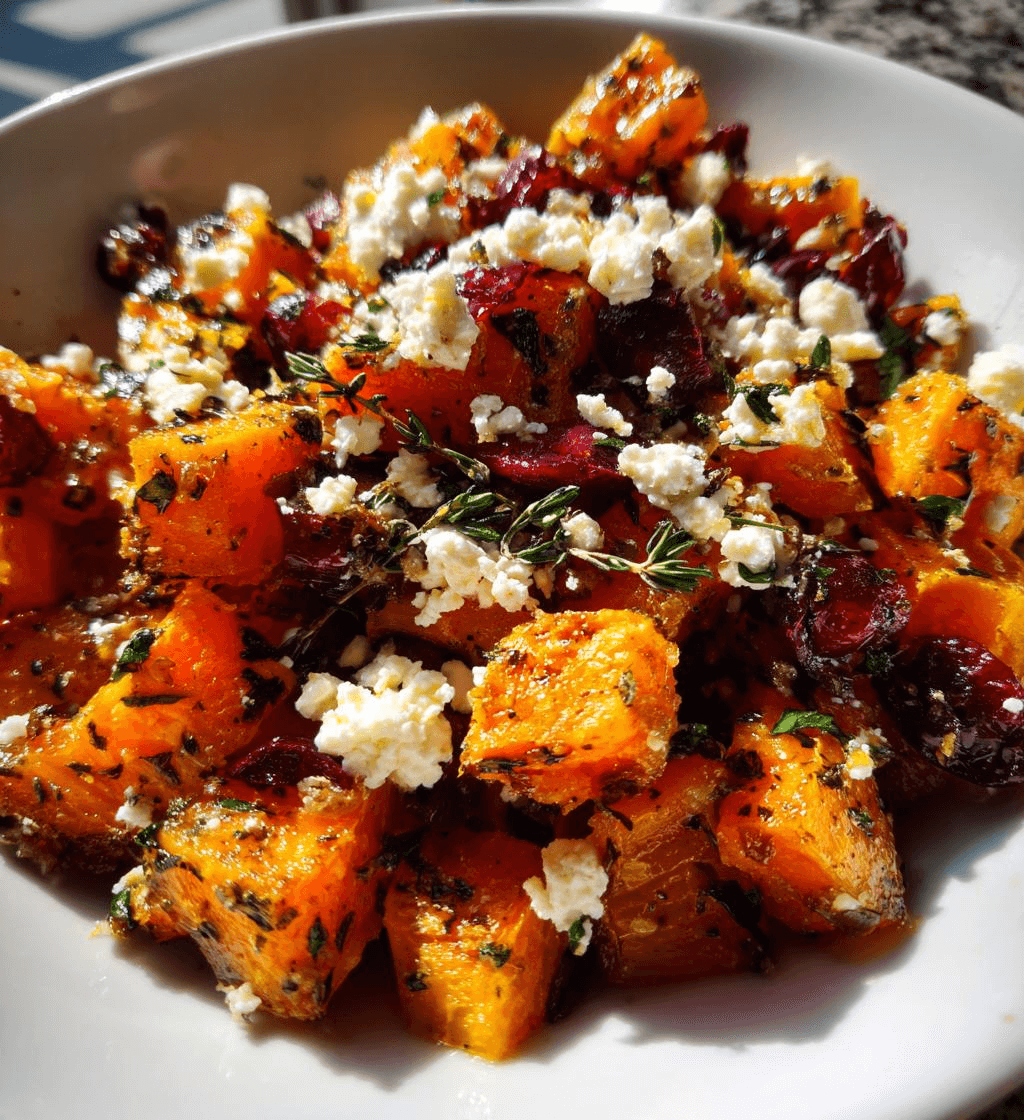
Roasted butternut squash has a unique ability to transform a simple meal into something extraordinary. Its natural sweetness, coupled with the tartness of cranberries and the creaminess of feta cheese, creates a flavor profile that is both comforting and exciting. This dish shines as a side or a main feature, bringing warmth to your table during cooler months.
The addition of cranberries not only introduces a delightful tartness but also adds a bright pop of color. Meanwhile, the feta contributes a savory creaminess that balances the sweetness of the squash perfectly. Together, these ingredients make for a harmonious dish that can appeal to the whole family.
Ingredients
- 1 medium butternut squash, peeled and cubed
Butternut squash is the star of this dish, providing a sweet and nutty flavor. Roasting enhances its natural sugars, creating a caramelized exterior while keeping the inside tender. - 1 cup fresh or dried cranberries
Cranberries add a tangy burst that cuts through the richness of the squash and feta. If using dried cranberries, they offer a chewy texture, while fresh ones provide a juicy pop. - 1/2 cup crumbled feta cheese
Feta brings a creamy, salty element that harmonizes beautifully with the sweet and tart components of the dish. It also adds a lovely textural contrast to the roasted vegetables. - 2 tablespoons olive oil
Olive oil helps to coat the squash for even roasting, ensuring that it caramelizes beautifully while adding a layer of richness that enhances the overall flavor. - 1 teaspoon salt
Salt is essential for enhancing flavors and bringing out the natural sweetness in the butternut squash, ensuring every bite is satisfying. - 1/2 teaspoon black pepper
Black pepper adds a subtle kick, balancing the dish's sweetness and enhancing the other flavors without overpowering them. - 1 teaspoon dried rosemary or thyme
Herbs infuse the dish with a warm, earthy aroma. Rosemary or thyme pair exceptionally well with squash, elevating its flavor profile.
Directions & Preparation
Step 1: Preheat your oven to 400°F (200°C).
Starting with a properly preheated oven is crucial for achieving the perfect roast. This temperature allows the squash to caramelize nicely without becoming mushy. Preheating ensures an even cooking temperature throughout the roasting process.
Step 2: Prepare the butternut squash by peeling, seeding, and cutting it into 1-inch cubes.
Uniformly sized pieces ensure that the squash cooks evenly. Take care when peeling and cutting, as butternut squash can be tough to manage. The goal is to create bite-sized cubes that will become tender and flavorful during roasting.
Step 3: In a large mixing bowl, toss the cubed squash with olive oil, salt, pepper, and herbs until evenly coated.
Coating the squash in oil and seasoning will help it roast rather than steam, enhancing flavor and texture. Take a moment to ensure all pieces are well-covered; this step is key for achieving that perfect roasted finish.
Step 4: Spread the squash evenly on a large baking sheet in a single layer, ensuring adequate space between pieces.
Spacing the squash allows for proper airflow around each piece, preventing steaming and ensuring a crispy exterior. If the pan is overcrowded, the sugar won't caramelize as effectively.
Step 5: Roast the squash in the preheated oven for 25-30 minutes, or until tender and caramelized, stirring halfway through.
Stirring occasionally promotes even browning and caramelization. The squash is done when it’s easily pierced with a fork and has turned a rich golden-brown color, indicative of those delicious flavors developing.
Step 6: Add the cranberries to the baking sheet and return to the oven for an additional 5-10 minutes.
This step allows the cranberries to soften and release their juices, blending their tartness with the sweetness of the squash. Keep an eye on them to prevent burning, as dried cranberries can darken quickly.
Step 7: Remove the baking sheet from the oven and sprinkle the roasted mixture with crumbled feta cheese.
Adding feta at the end allows it to warm slightly without melting completely, maintaining its texture. This final touch elevates the dish visually and adds a creamy element that enhances every bite.
Step 8: Serve warm, garnished with extra herbs if desired.
Garnishing with fresh herbs can brighten the dish visually and add an aromatic layer. Serving it warm provides comfort and accentuates the dish's enticing aromas.

Balancing Sweetness and Tartness
The combination of the sweet roasted butternut squash and the tangy cranberries creates a beautiful interplay of flavors. This balance is crucial in dishes where contrasting tastes enhance one another. Furthermore, the feta's saltiness complements and pulls together the sweetness, allowing each flavor to shine without overpowering the others.
Roasting Techniques for Perfection
Roasting is a fundamental cooking method that enhances the natural flavors of vegetables. By caramelizing the exterior while preserving moisture within, roasting enables a lovely texture. It’s important to monitor the time closely and make adjustments based on your oven's quirks to avoid overly soft or charred edges.
Creative Serving Suggestions
While this roasted dish is delightful on its own, consider serving it over a fresh bed of arugula or mixed greens. The peppery greens provide contrast, while the roasting juices can act as a light dressing. Another option is to incorporate it into grain bowls with quinoa or farro, creating a well-rounded meal that includes healthy carbs alongside the vegetables.
FAQs
What if my roasted squash is too hard?
If the squash is too firm after roasting, it may need more time in the oven. Try extending the roasting time in 5-minute increments until it's tender.
Can I use other types of squash for this recipe?
Yes, you can substitute with acorn squash or pumpkin. Just adjust cooking times slightly according to the size and texture.
How do I prevent the cranberries from burning?
To avoid burning the cranberries, add them halfway through the roasting process. Keep an eye on them to ensure they stay juicy.
What can I do if the dish tastes bland?
If the dish lacks flavor, consider adjusting the seasonings, adding a splash of balsamic vinegar, or a sprinkle of fresh herbs just before serving.
Is it necessary to peel the butternut squash?
Peeling the squash is recommended for a smoother texture in the final dish. The skin can be tough and might detract from the overall eating experience.
How can I add more crunch to this dish?
For added crunch, consider topping the dish with toasted walnuts or pecans just before serving. They provide a delightful textural contrast.
Conclusion
Roasted butternut squash with cranberries and feta is more than just a dish; it's a celebration of fall flavors that can be enjoyed year-round. The combination of ingredients creates a dish that feels both indulgent and wholesome.
Whether you serve it as a side dish or as part of a hearty meal, the result is a colorful, appetizing plate that invites seconds. Embrace the ease and enjoyment of this recipe and bring it to your table to delight family and friends.
Recipe Card
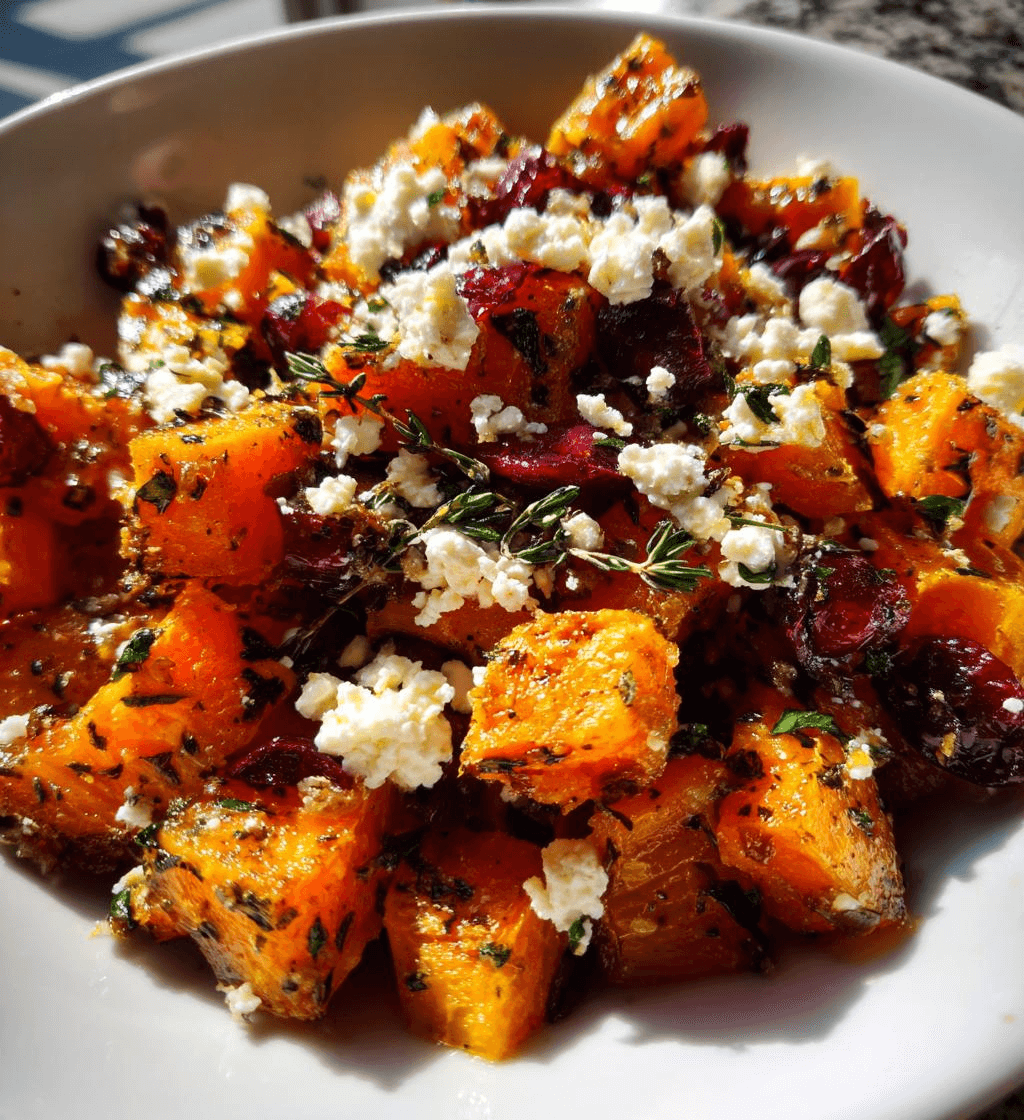
Roasted Butternut Squash with Cranberries and Feta Bliss
Ingredients
Method
- Preheat your oven to 400°F (200°C).
- Prepare the butternut squash by peeling, seeding, and cutting it into 1-inch cubes.
- In a large mixing bowl, toss the cubed squash with olive oil, salt, pepper, and herbs until evenly coated.
- Spread the squash evenly on a large baking sheet in a single layer, ensuring adequate space between pieces.
- Roast the squash in the preheated oven for 25-30 minutes, or until tender and caramelized, stirring halfway through.
- Add the cranberries to the baking sheet and return to the oven for an additional 5-10 minutes.
- Remove the baking sheet from the oven and sprinkle the roasted mixture with crumbled feta cheese.
- Serve warm, garnished with extra herbs if desired.
Notes
Additional serving suggestions: pair with a crisp salad, garlic bread, or roasted seasonal vegetables for balance.
For make-ahead, prep components separately and assemble just before heating to preserve texture.
Taste and adjust with acid (lemon/vinegar) and salt right at the end to wake up flavors.