Introduction
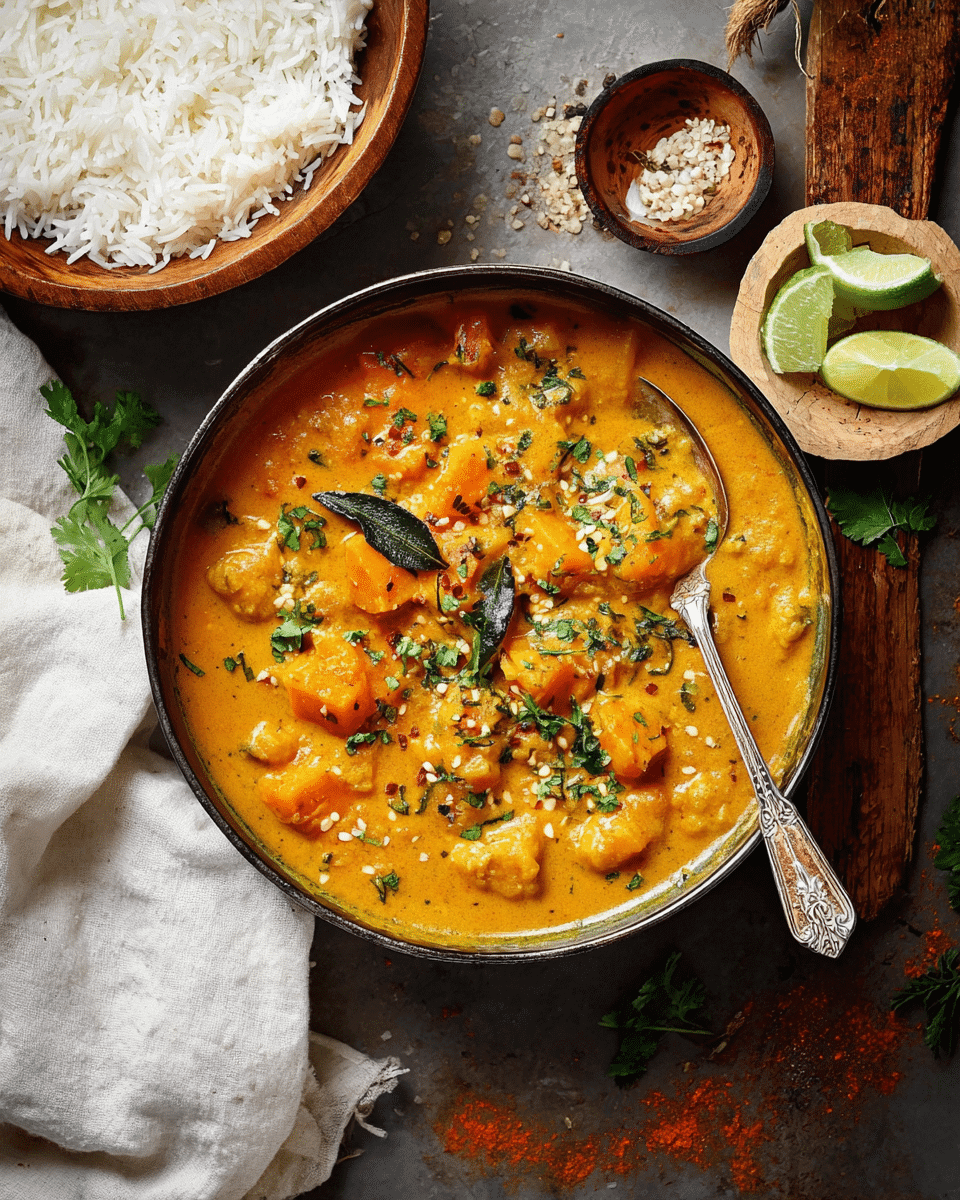
Indian pumpkin curry is a delightful dish that brings together the rich flavors of spices and the natural sweetness of pumpkin. This vibrant curry captures the essence of Indian cuisine, showcasing how a humble vegetable can transform into something truly magnificent. Whether you’re a seasoned home cook or just starting out, this recipe invites you to experience the warmth of Indian flavors.
With its comforting texture and aromatic profile, this pumpkin curry is perfect for family dinners or meal prep for the week. Moreover, it's versatile enough to be served alongside rice or bread, making it an excellent choice for any occasion. Let’s dive into the ingredients and preparation to create a dish that will surely become a favorite.
Ingredients
- 2 cups diced pumpkin
Pumpkin serves as the centerpiece of this curry, contributing a naturally sweet flavor and creamy texture once cooked. It absorbs spices beautifully, making every bite a delightful experience. - 1 large onion, finely chopped
Onions add depth and sweetness, essential for building the curry's flavor base. Sautéing them until golden enhances their natural sugars and brings a savory quality. - 2 tomatoes, chopped
Tomatoes contribute acidity and moisture, balancing the sweetness of the pumpkin. They also help form the rich sauce that coats the vegetable. - 2 tablespoons ginger-garlic paste
A staple in Indian cooking, ginger-garlic paste provides an aromatic foundation of flavor that adds complexity and warmth to the curry. - 1 teaspoon turmeric powder
Turmeric adds vibrant color and a subtle earthiness to the dish. Its anti-inflammatory properties also serve to boost the overall nutritional value. - 1 teaspoon cumin seeds
Cumin seeds introduce a warm, nutty flavor and earthiness that enhances the overall taste of the curry, essential in Indian cuisine. - 1 teaspoon garam masala
This spice blend elevates the curry with a symphony of warm spices that offer a fragrant finish, encapsulating the essence of traditional Indian dishes. - 2 green chilies, slit
Green chilies add a kick of heat, which is customizable depending on your spice tolerance. They contribute brightness and flavor complexity to the curry. - 1 cup coconut milk
Coconut milk lends creaminess and richness, balancing the spices with its natural sweetness and adding a comforting texture. - Salt to taste
Salt enhances all the flavors in the curry, ensuring a well-rounded dish. Adjusting salt levels is crucial depending on personal preference. - Fresh cilantro for garnish
Cilantro not only adds a pop of color but its fresh, herbaceous notes provide a refreshing contrast to the rich curry.
Directions & Preparation
Step 1: Prepare the pumpkin.
Begin by peeling and dicing the pumpkin into uniform cubes. This ensures even cooking and allows the pumpkin to absorb the flavors of the spices successfully. Choose ripe pumpkin for the sweetest flavor, as this will elevate the entire curry experience.
Step 2: Sauté the onions.
In a large pot or skillet, heat oil over medium heat and add the chopped onions. Sauté them until they turn golden brown, which typically takes around 8-10 minutes. This caramelization process is essential as it builds the flavor base for the curry.
Step 3: Add ginger-garlic paste and chilies.
Once the onions are nicely browned, add the ginger-garlic paste and slit green chilies to the pot. Sautéing these ingredients for a few minutes releases their essential oils, infusing the oil with rich flavors that form the aromatic backbone of the curry.
Step 4: Incorporate tomatoes and spices.
Next, add the chopped tomatoes along with the turmeric powder and cumin seeds. Cook until the tomatoes soften and break down, which typically takes about 5-7 minutes. This step creates a flavorful sauce as the tomatoes meld with the spices, deepening the curry's flavor.
Step 5: Mix in the pumpkin.
Add the diced pumpkin to the pot, stirring well to coat it with the spiced onion-tomato mixture. This step ensures that every piece of pumpkin is well-seasoned. The pumpkin will cook down and absorb all the aromatic flavors.
Step 6: Pour in the coconut milk.
After mixing the pumpkin well, pour in the coconut milk. This will create a creamy sauce that enlivens the curry while mellowing the spices. Allow it to come to a gentle simmer, and be sure to stir occasionally to prevent sticking.
Step 7: Season and cook.
Season the curry with salt to taste, then cover and let it simmer for about 20-25 minutes or until the pumpkin is tender. Cooking it longer allows the flavors to meld beautifully, ensuring each bite is flavorful and satisfying.
Step 8: Finish with garam masala and garnish.
As the curry nears completion, stir in the garam masala, allowing it to bloom for a couple of minutes. This final touch amplifies the depth of flavor in the curry. Garnish with fresh cilantro before serving to add brightness and an herbaceous note.
Balancing Flavors in Pumpkin Curry
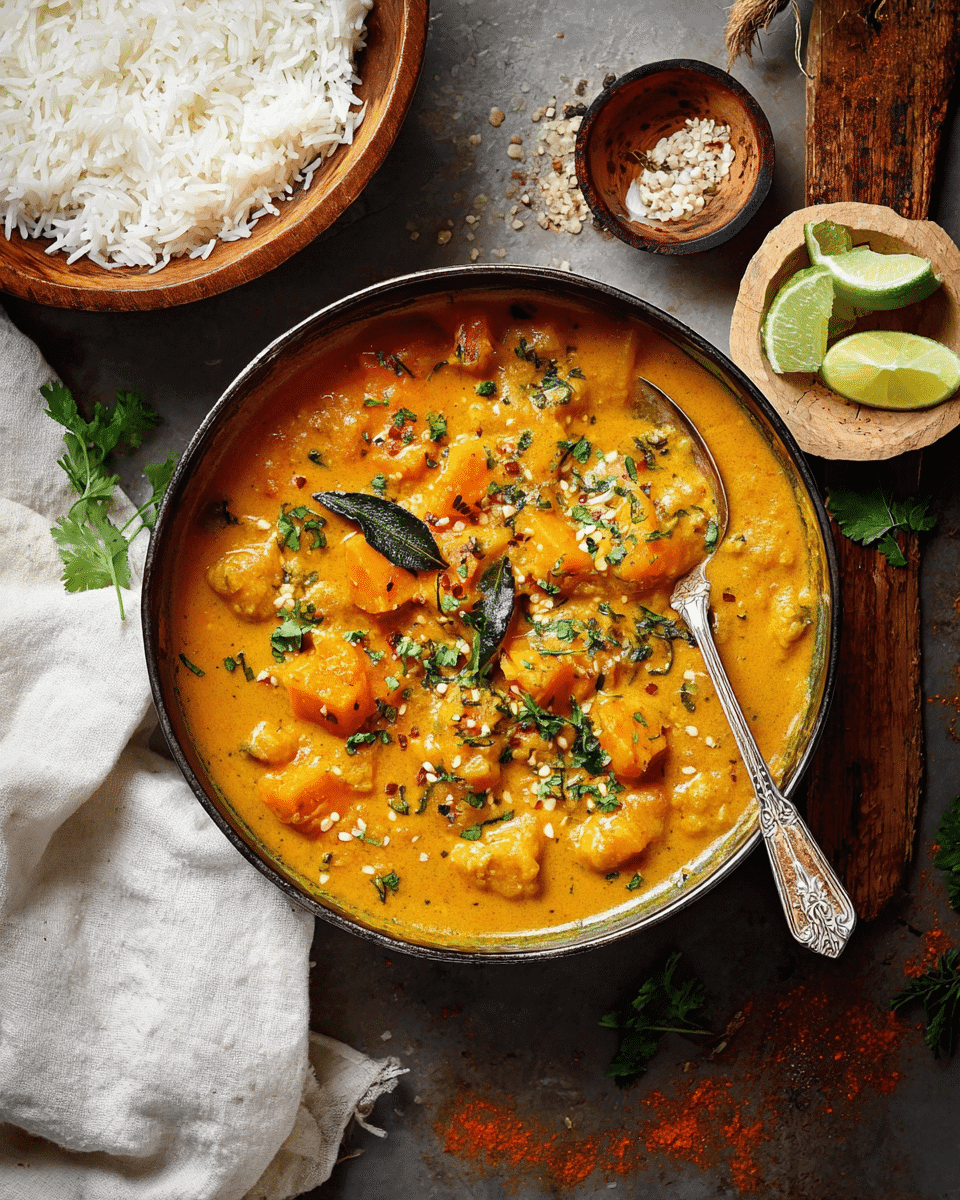
Achieving a perfect balance of flavors in your pumpkin curry is essential for a satisfying dish. The combination of sweet pumpkin, tangy tomatoes, and the warmth of spices creates a harmonious profile. Adjusting the spice level with chilies and balancing sweetness with coconut milk allows for a custom experience tailored to your palate.
The Role of Coconut Milk
Coconut milk is not just a creamy addition; it also plays a crucial role in moderating the spices in the curry. Its richness brings a sense of comfort, while the natural sweetness complements the pumpkin's flavors. For a lighter version, consider using light coconut milk or diluting it with a bit of vegetable broth.
Exploring Variations and Additions
While this recipe focuses on pumpkin, the fundamental curry technique can be adapted to include other vegetables or proteins. Consider adding chickpeas or spinach for extra nutrition, or substituting the pumpkin with butternut squash for a similar flavor profile. Each variation offers a unique twist while preserving the essence of a delightful curry.
FAQs
What if my pumpkin is still hard after cooking?
If the pumpkin remains firm after cooking, try covering the pot and letting it simmer for an additional 10-15 minutes. The steam can help soften the pumpkin further.
Can I use pre-cooked pumpkin instead of raw?
Yes, using pre-cooked pumpkin is a great time-saver. Simply add it toward the end of the cooking process to warm it through and allow it to absorb the flavors without overcooking.
How can I enhance the spice levels in this recipe?
To increase the spice levels, consider adding more green chilies, a pinch of red chili powder, or even some freshly ground black pepper to taste. Start with small amounts to find your ideal heat.
What can I do if my curry is too thick?
If the curry turns out too thick, you can easily adjust the consistency by adding a bit of water or additional coconut milk. Stir well and simmer for a few more minutes to incorporate the changes.
Is it possible to make this dish richer?
For a richer flavor, consider adding a tablespoon of mustard oil or ghee at the end of cooking. This adds a luxurious mouthfeel and an extra layer of flavor.
Can I add different vegetables to the curry?
Absolutely! Vegetables like spinach, peas, or cauliflower work beautifully in this curry. Just adjust the cooking time for the different vegetables to ensure even tenderness.
Conclusion
Indian pumpkin curry is not just about ingredients; it’s a celebration of spices and comfort. Embrace the opportunity to explore this dish, which invites creativity while providing nourishment for both body and soul. You may find it becomes a cherished recipe in your rotation.
As you serve this curry to family and friends, watch as smiles spread with each flavorful bite. Cooking can be an adventure, and every spoonful of this dish reminds us of the beauty in simple, wholesome ingredients coming together beautifully.
Recipe Card
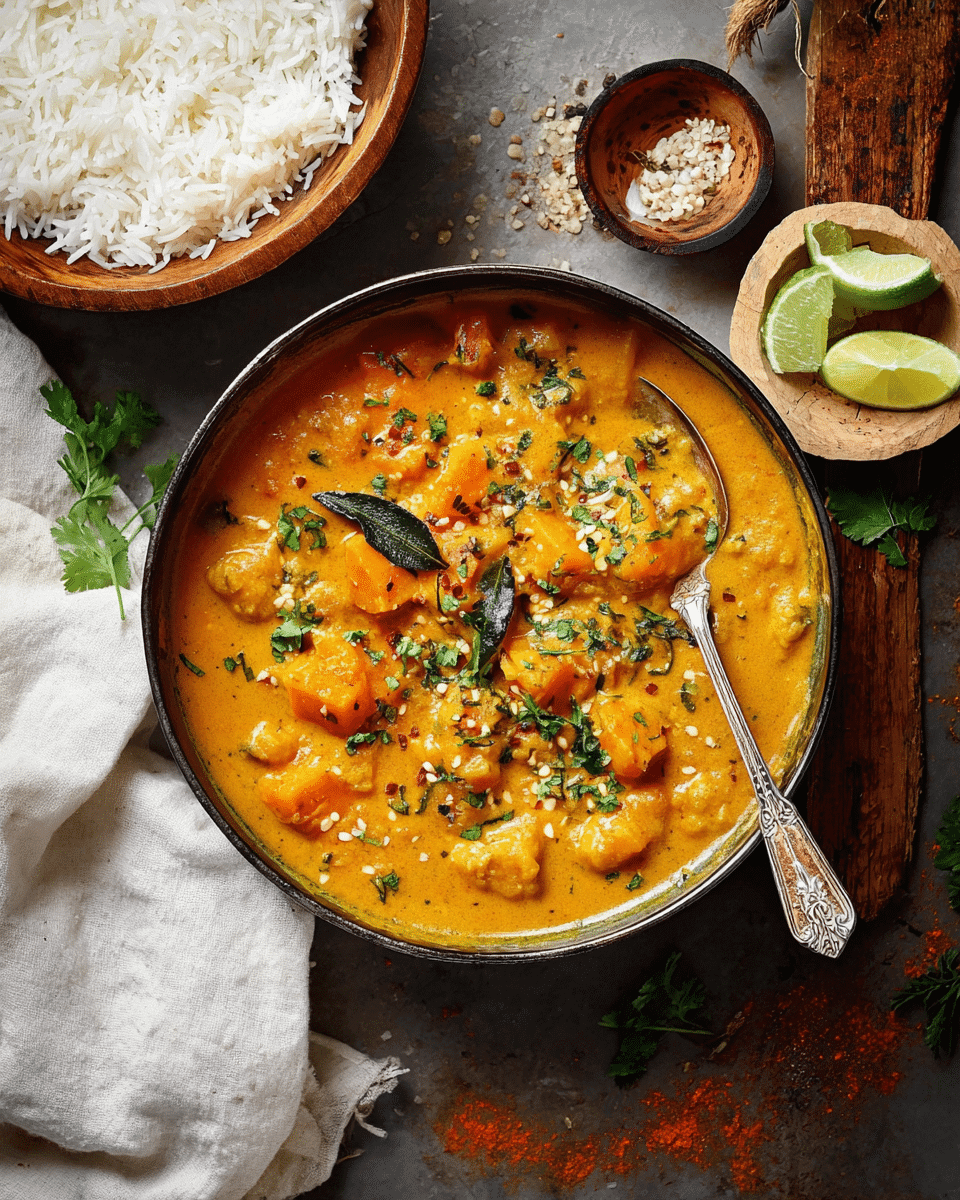
Savoring Indian Pumpkin Curry with Traditional Spices
Ingredients
Method
- Prepare the pumpkin.
- Sauté the onions.
- Add ginger-garlic paste and chilies.
- Incorporate tomatoes and spices.
- Mix in the pumpkin.
- Pour in the coconut milk.
- Season and cook.
- Finish with garam masala and garnish.
Notes
Additional serving suggestions: pair with a crisp salad, garlic bread, or roasted seasonal vegetables for balance.
For make-ahead, prep components separately and assemble just before heating to preserve texture.
Taste and adjust with acid (lemon/vinegar) and salt right at the end to wake up flavors.