Introduction
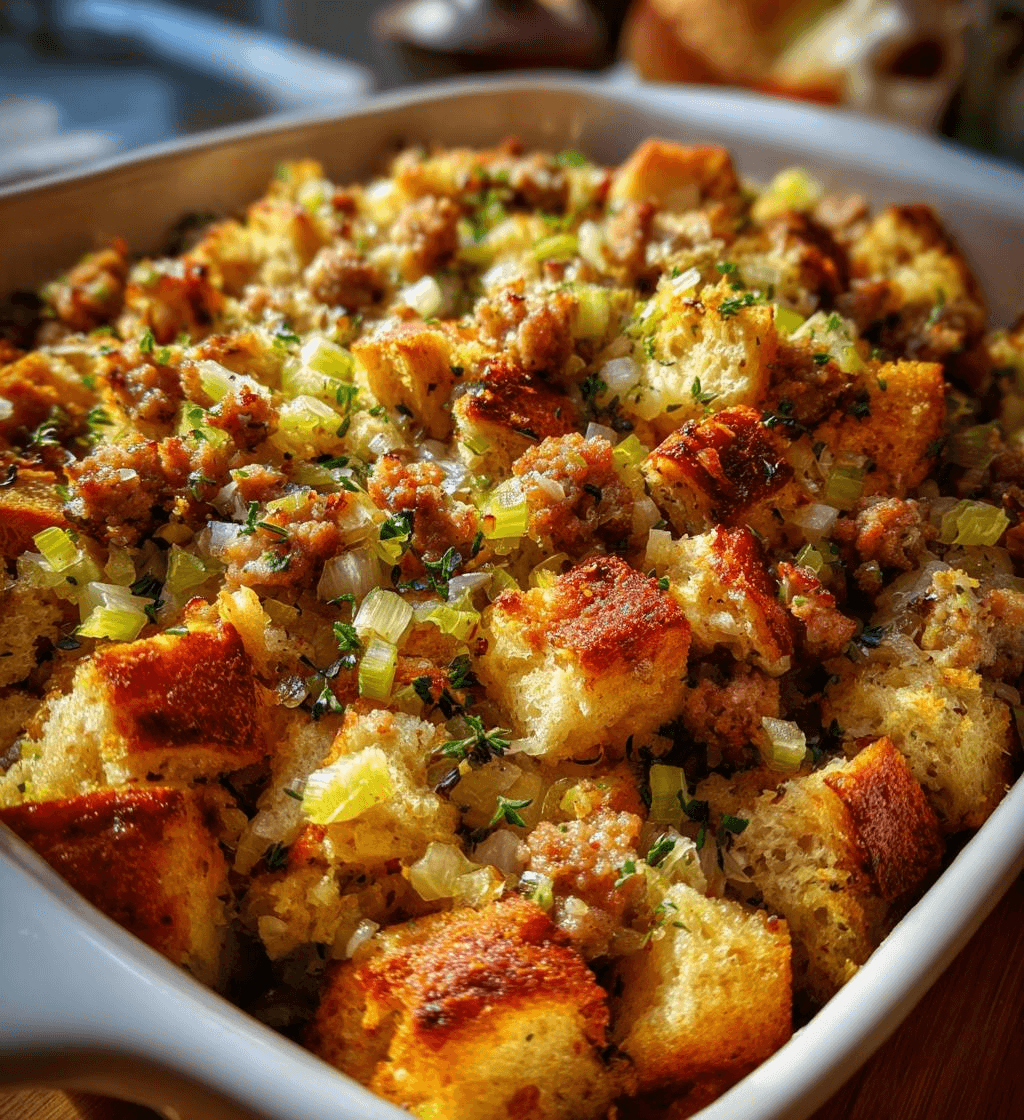
As Thanksgiving approaches, many home cooks are busy planning the perfect feast. One dish that consistently stands out on the holiday table is sausage stuffing. This hearty side not only complements the turkey, but also embodies the warm flavors of the season.
Sausage stuffing offers a delightful texture and rich taste that elevates any Thanksgiving spread. With each bite, you’ll experience savory sausage mingling with aromatic herbs and tender bread, creating a symphony of flavors that will have your guests coming back for seconds.
Ingredients
- 1 pound Italian sausage
The sausage provides the main flavor base, imbuing the stuffing with its rich, savory qualities. Choose sweet or spicy according to your taste preference. - 8 cups cubed bread (stale or toasted)
Bread acts as the bulk of the stuffing, absorbing the flavorful broth and seasonings. Stale or toasted bread helps maintain texture so the stuffing doesn't turn mushy. - 1 medium onion, diced
Onion adds sweetness and depth, enriching the overall flavor profile of the stuffing. Sautéing enhances its sweetness and allows it to meld perfectly with the sausage. - 2 celery stalks, diced
Celery introduces a refreshing crunch and subtle earthiness, balancing the richness of the sausage. It also contributes to the classic stuffing flavor. - 4 cloves garlic, minced
Garlic infuses the stuffing with an aromatic essence that enhances the other flavors. Its pungent kick is toned down by cooking, mellowing into a delightful richness. - 2 tablespoons fresh sage, chopped
Sage is a traditional herb for stuffing, imparting a warm, herbal note that pairs beautifully with the sausage. Fresh sage brightens the dish and brings a seasonal touch. - 1 tablespoon fresh thyme, chopped
Thyme complements sage and adds a layer of complexity with its earthy flavor. It enhances the overall aroma and taste, making the stuffing more aromatic. - 2 cups chicken broth
Broth is crucial for bringing the stuffing to life by adding moisture and flavor. It allows the bread to soak and absorb all the savory elements. - Salt and pepper, to taste
These basic seasonings help to enhance all the other flavors present in the stuffing. Adjusting them to your preference is vital for a well-rounded dish.
Directions & Preparation
Step 1: Preheat the oven to 350°F (175°C).
Preheating the oven ensures that the stuffing cooks evenly and thoroughly. A properly heated oven helps to achieve that perfect golden-brown crust on top while keeping the inside moist.
Step 2: In a large skillet, brown the sausage over medium heat.
Browning the sausage is essential for developing rich flavors through caramelization. Use a wooden spoon to break it apart, allowing it to cook evenly and release its juices.
Step 3: Add the diced onion and celery to the skillet; sauté until softened.
This step allows the onions and celery to release their moisture and become tender, blending their flavors with the sausage. It creates a flavorful base for the stuffing.
Step 4: Stir in the minced garlic, sage, and thyme; cook for another minute.
Adding the garlic and herbs at this stage allows their aromas to bloom without burning. This releases oils that enhance the stuffing's overall flavor.
Step 5: In a large mixing bowl, combine the bread cubes, sausage mixture, and broth.
Mixing the bread with the savory mixture is crucial as it allows each cube to absorb the rich flavors and moisture from the sausage and broth, ensuring that every bite is flavorful.
Step 6: Season with salt and pepper, adjusting to taste; mix well.
Tasting and adjusting the seasoning at this stage is vital. The amount of salt and pepper can make a significant difference in flavor; a well-seasoned stuffing will elevate your dish.
Step 7: Transfer the mixture to a greased baking dish, spreading it evenly.
Transferring to a baking dish allows for even cooking and browning. Spreading it out ensures that the top gets crispy while the inside remains moist and flavorful.
Step 8: Cover the baking dish with aluminum foil and bake for 25 minutes.
Covering the dish initially helps retain moisture, ensuring the stuffing cooks through without drying out. This step allows flavors to meld while retaining a tender texture.
Step 9: Remove the foil and bake for an additional 15-20 minutes, or until golden.
Removing the foil during the last baking period allows the top to crisp up, creating a textural contrast. The golden crust enhances both appearance and taste.

The Role of Sausage in Flavor Development
Using sausage in stuffing not only contributes to flavor but also adds richness and a savory depth that elevates the dish. The fat rendered from the sausage carries and mingles with spices and herbs, ensuring a well-rounded taste. Opting for quality sausage can transform the stuffing from basic to extraordinary, making it a memorable part of your Thanksgiving feast.
Herbs that Bring Thanksgiving to Life
Fresh herbs like sage and thyme are quintessential to classic Thanksgiving flavors. They infuse the stuffing with seasonal aromas that evoke warmth and comfort. The interplay between the herbs and the savory elements offers a balance that enhances every bite, binding the dish to traditional Thanksgiving while allowing for a modern twist.
Texture: The Key to a Satisfying Stuffing
Achieving the right texture in sausage stuffing is about balancing the crispy top with a moist inside. The ideal stuffing should be hearty yet tender, with the bread absorbing flavorful juices while still holding its shape. This contrast makes each bite enjoyable, inviting eaters to experience a delightful combination of textures alongside the rich flavors.
FAQs
What type of bread is best for sausage stuffing?
Stale bread or day-old bread works best as it holds up well when mixed with broth without becoming mushy. Options like sourdough, French bread, or whole wheat offer great texture and flavor.
Why is my stuffing too dry?
A dry stuffing may indicate insufficient broth or overbaking. Ensure there’s enough broth for the bread to absorb and consider adding extra, if necessary, before baking.
Can I scale the recipe for a larger group?
Absolutely! You can double or triple the ingredients as necessary. Just be sure to adjust baking dish sizes and check cooking times, ensuring everything is evenly cooked.
What if my stuffing tastes bland?
Adjusting seasoning is crucial if your stuffing lacks flavor. Add more salt, pepper, or herbs after tasting, and consider incorporating additional spices or a splash of lemon for brightness.
How do I keep my stuffing from becoming mushy?
To prevent mushiness, avoid over-soaking the bread, and use a mix of stale or toasted bread. Ensure the right chicken broth amount is used to keep it moist but not soggy.
Is it okay to use a different kind of sausage?
Yes, feel free to substitute with chicken or turkey sausage for a lighter option or use flavored varieties like apple or herb sausage for a twist.
Conclusion
Sausage stuffing is a dish that not only fills the stomach but also warms the heart. With its rich flavors and satisfying texture, it has the power to enhance any Thanksgiving gathering, making it memorable for all who partake.
By following this recipe, you can create a delicious homemade sausage stuffing that will become a beloved tradition at your holiday table. Embrace the spirit of Thanksgiving and share this heartfelt dish with family and friends.
Recipe Card
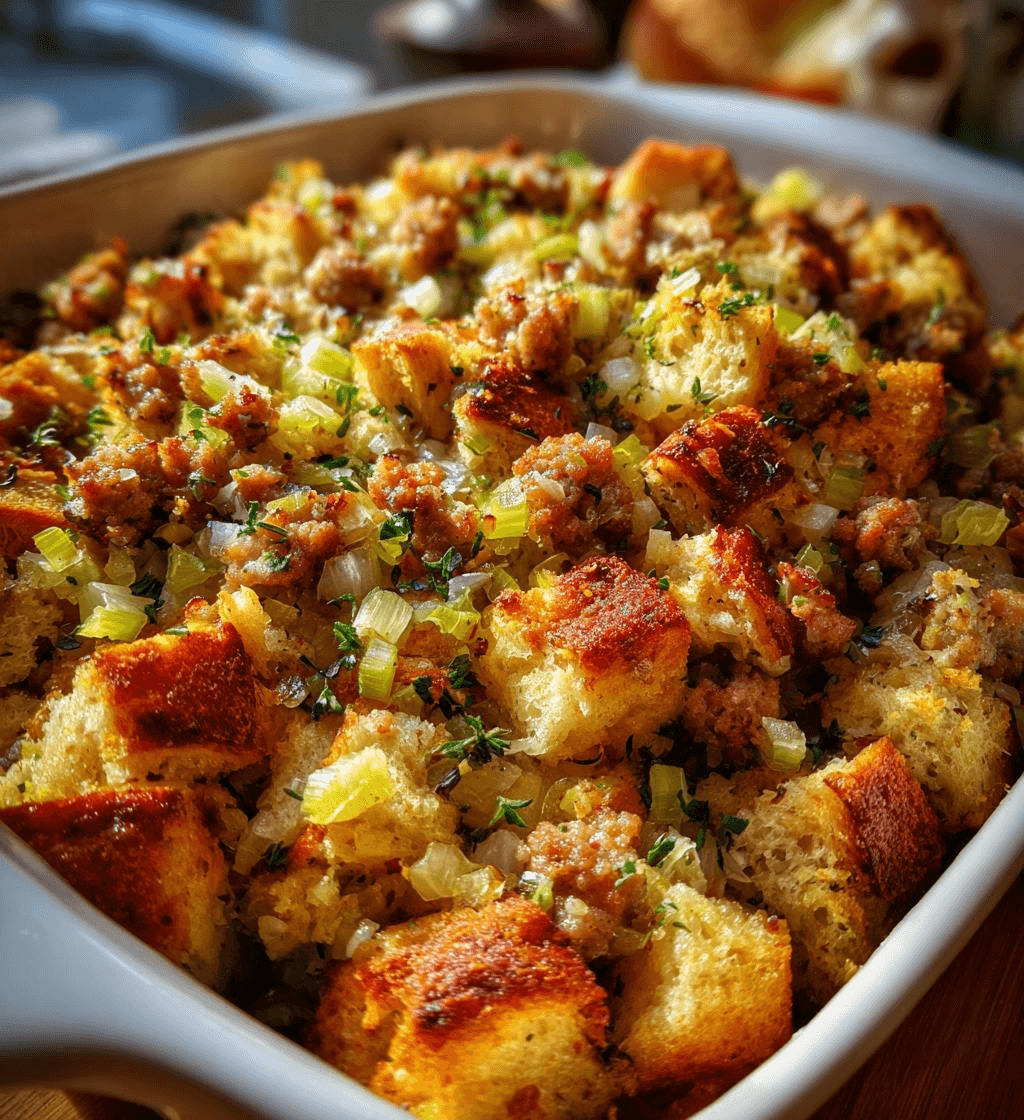
Savor the Flavor of Sausage Stuffing for Thanksgiving
Ingredients
Method
- Preheat the oven to 350°F (175°C).
- In a large skillet, brown the sausage over medium heat.
- Add the diced onion and celery to the skillet; sauté until softened.
- Stir in the minced garlic, sage, and thyme; cook for another minute.
- In a large mixing bowl, combine the bread cubes, sausage mixture, and broth.
- Season with salt and pepper, adjusting to taste; mix well.
- Transfer the mixture to a greased baking dish, spreading it evenly.
- Cover the baking dish with aluminum foil and bake for 25 minutes.
- Remove the foil and bake for an additional 15-20 minutes, or until golden.
Notes
Additional serving suggestions: pair with a crisp salad, garlic bread, or roasted seasonal vegetables for balance.
For make-ahead, prep components separately and assemble just before heating to preserve texture.
Taste and adjust with acid (lemon/vinegar) and salt right at the end to wake up flavors.