Introduction
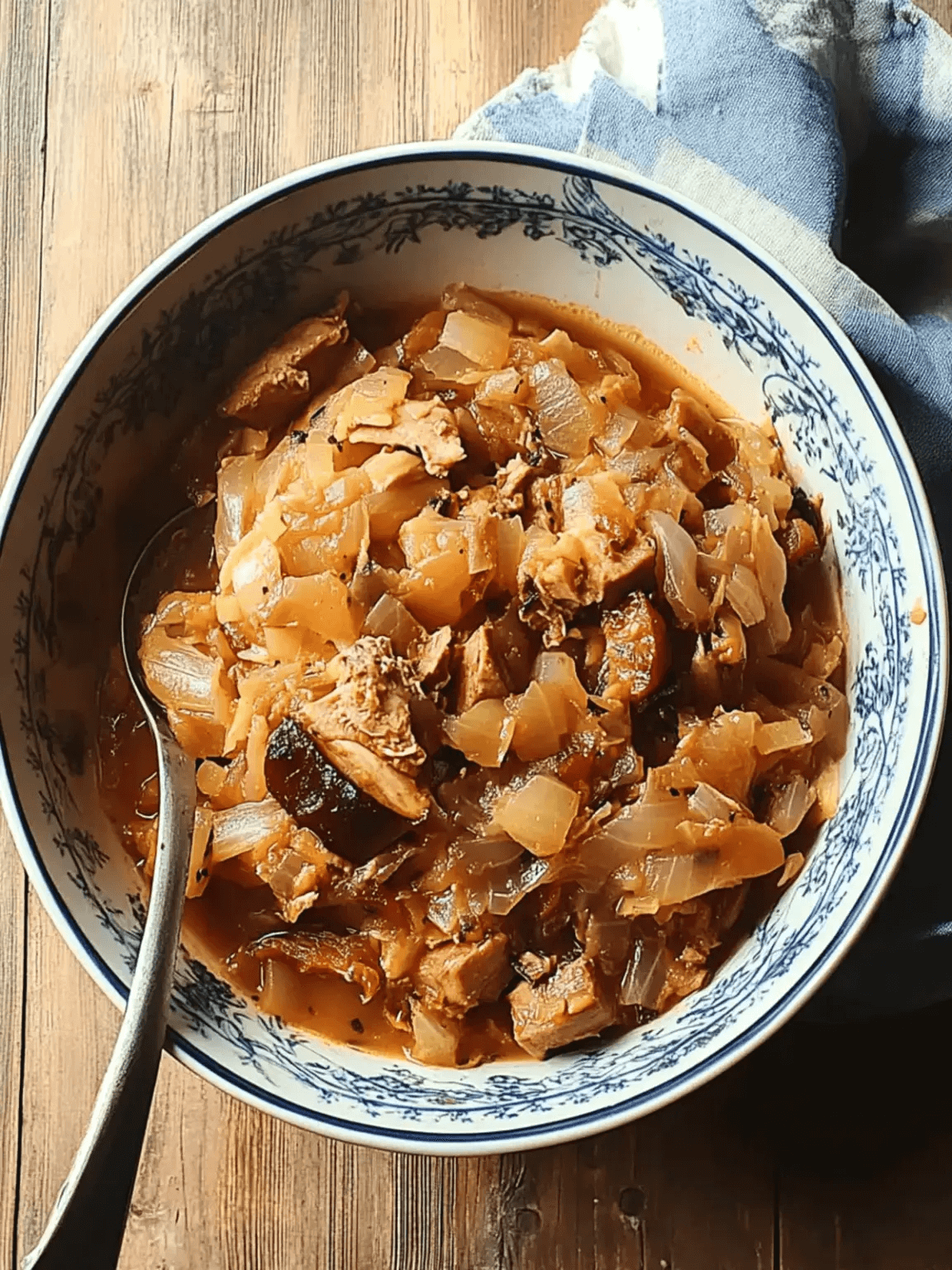
As the chilly evenings roll in, nothing beats the warmth of a hearty stew to comfort your soul. Bigos, often referred to as hunter's stew, is a classic Polish dish that combines an array of meats, sauerkraut, and fresh cabbage. It's a dish steeped in tradition, known for its rich flavors and nourishing qualities, making it an ideal companion for those cozy nights spent indoors.
The beauty of bigos lies not only in its comforting taste but also in its versatility. Every family has its own version, passed down through generations, allowing for personalization based on available ingredients or dietary preferences. This recipe, while authentic, is designed to inspire your creativity, inviting you to experiment with flavors and textures while paying homage to its roots.
Ingredients
- 1 lb pork shoulder, cubed
Pork shoulder adds richness and a hearty texture that forms the base of the stew. Its fat content ensures the stew is moist and flavorful. - 1 lb smoked sausage, sliced
Smoked sausage introduces a depth of smoky flavor that is characteristic of bigos, enhancing the overall savory profile of the dish. - 1 lb sauerkraut, drained and rinsed
Sauerkraut, a fermented cabbage, adds a tangy note that balances the richness of the meats and enhances digestibility. - 1 cup fresh cabbage, chopped
Fresh cabbage contributes a satisfying crunch and layers of flavor that meld beautifully with the other ingredients in the stew. - 1 large onion, chopped
Onions provide a natural sweetness that caramelizes during cooking, forming a flavorful base that complements the savory elements of bigos. - 2 cloves garlic, minced
Garlic enriches the dish with its pungent aroma and depth of flavor, creating a fragrant stew that is inviting and comforting. - 2 cups beef broth
Beef broth adds a robust umami flavor and keeps the stew moist during the lengthy cooking process, allowing flavors to develop. - 2 tablespoons tomato paste
Tomato paste introduces a hint of acidity and sweetness, balancing the flavors of the stew and giving it a beautiful color. - 1 tablespoon paprika
Paprika adds not only a warm color to the bigos but also a subtle smokiness that pairs wonderfully with the meats. - 1 teaspoon caraway seeds
Caraway seeds bring its distinctive earthy flavor, historically used in Polish cuisine to enhance the meat dishes. - Salt and pepper to taste
Salt and pepper are essential for amplifying the dish's flavors while allowing each ingredient's character to shine. - 1 bay leaf
A bay leaf infuses the stew with aromatic notes, complementing the fattiness of the meats and adding a subtle herbal dimension.
Directions & Preparation
Step 1: Prepare the meats and vegetables.
Begin by cubing the pork shoulder and slicing the smoked sausage. Chop the onion and fresh cabbage, and finely mince the garlic. Preparing these ingredients ahead of time simplifies the cooking process. Ensure you have everything on hand as this dish cooks relatively quickly once all components are ready.
Step 2: Sauté the onion and garlic.
In a large pot over medium heat, add a drizzle of oil and sauté the chopped onion until translucent. Add the minced garlic and cook for an additional minute. This step creates a flavorful base for the stew and sets the aromatic tone that will permeate every bite.
Step 3: Brown the pork and sausage.
Add the cubed pork shoulder to the pot and season with salt and pepper. Brown the meat on all sides, then add the sliced smoked sausage. Browning the meats develops a richer flavor through the Maillard reaction, creating a depth of taste that is vital for a satisfying stew.
Step 4: Incorporate the sauerkraut and fresh cabbage.
Stir in the drained sauerkraut and chopped fresh cabbage, cooking until the cabbage has begun to soften. The combination of fermented and fresh cabbage introduces different textures and a complex flavor profile, while also adding a good source of fiber.
Step 5: Add broth, tomato paste, and spices.
Pour in the beef broth, add the tomato paste, caraway seeds, paprika, and bay leaf. Stir well to combine all ingredients, ensuring the tomato paste is evenly distributed. This step is crucial for achieving the stew's signature flavor, blending all elements harmoniously.
Step 6: Simmer the stew.
Bring the stew to a boil, then reduce the heat to low. Cover and let it simmer for at least two hours, stirring occasionally. This long cooking time allows the flavors to meld and deepens the richness of the stew; low and slow is key.
Step 7: Adjust seasoning and serve.
After simmering, taste your bigos and adjust the seasoning with salt and pepper as needed. Allowing it to sit for a few hours or even overnight enhances the flavors further. Serve hot, ideally with rye bread or potatoes to soak up the delicious juices.
A Tradition Passed Down Generations
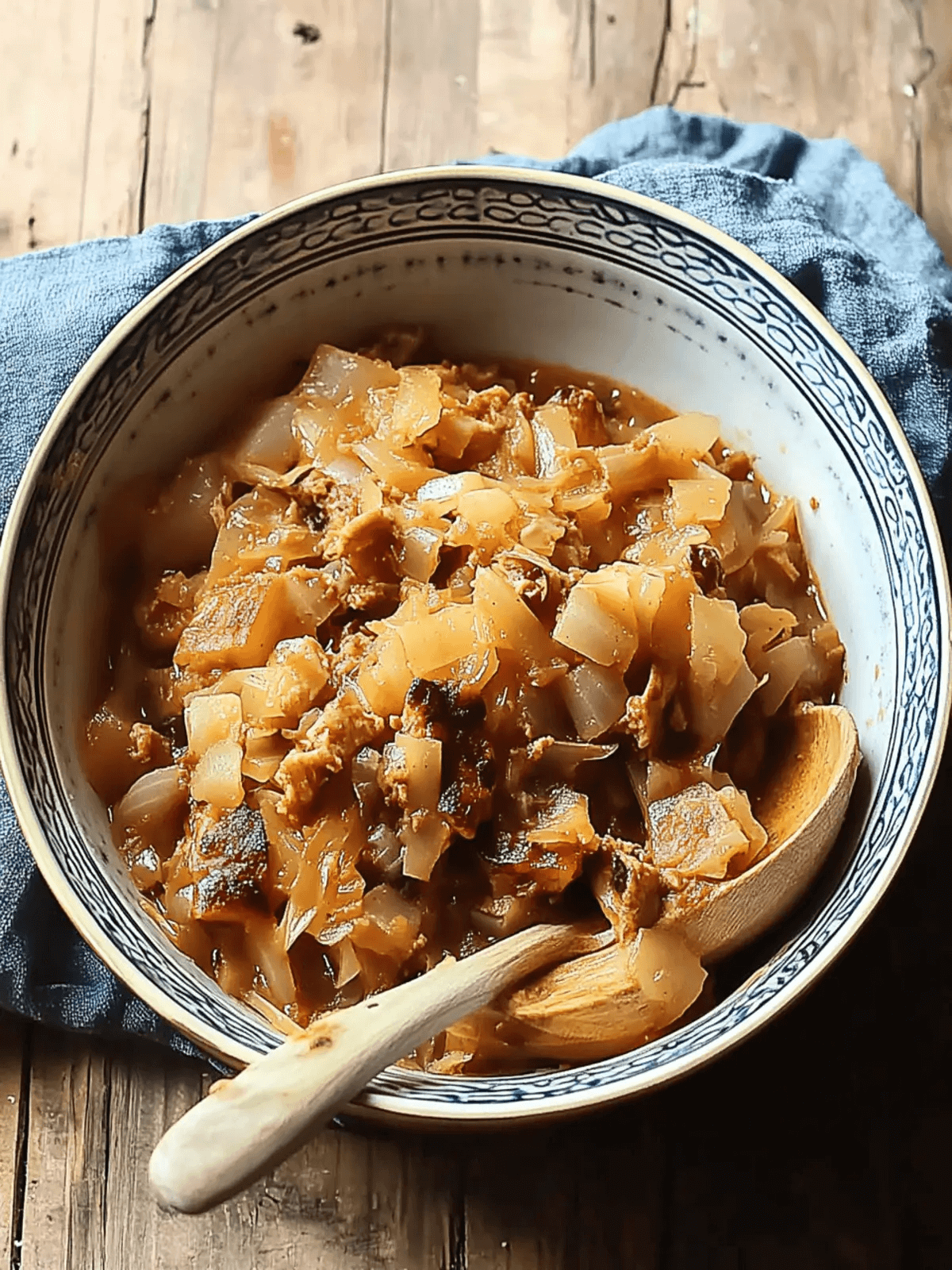
Bigos isn't just a meal; it's a historical dish emblematic of Polish culture, often served during winter months and festive gatherings. Families cherish their unique recipes, which vary widely across regions. This stew is a wonderful illustration of how food brings communities together, sharing warmth and comfort through generations.
Flexibility with Ingredients
One of the distinguishing features of bigos is how adaptable it is. While pork is traditional, many variations include beef, venison, or even mushrooms for vegetarian options. Personal touches can include adding your favorite spices, adjusting the sourness of the sauerkraut, or incorporating additional vegetables.
The Magic of Leftovers
Like many stews, bigos tends to taste even better the next day, when the flavors have had time to deepen and meld. It's an ideal dish for meal prep, allowing you to divide into portions for busy days. Enjoying leftovers not only saves time but also allows you to experience the satisfying transformation of the dish over time.
FAQs
What can I do if my bigos is too thick?
If your stew turns out too thick, simply stir in a little more beef broth or water until the desired consistency is reached. This will help maintain a balanced flavor without dilution.
How do I enhance the flavor if my bigos is bland?
To boost flavor, consider adding more salt or a splash of apple cider vinegar to enhance acidity. A dash of hot sauce can also increase depth and bring out the complexity of the dish.
What type of sausage works best for bigos?
Look for a smoked sausage, like kielbasa or another flavorful variety. A mix of sausages can add more varied textures and flavors, deepening the overall stew.
Can I use chicken instead of pork?
Chicken can be used but will yield a different flavor profile. Use dark meat for more moisture, and adjust cooking times as chicken typically cooks faster than pork.
Is it necessary to use both sauerkraut and fresh cabbage?
While both add unique flavors and textures, you can use just one if preferred. Adjust seasoning and cooking time according to your ingredient choice.
What other spices can I incorporate?
Feel free to experiment with additional spices like thyme or dill, which can introduce interesting flavor nuances without overpowering the stew.
Conclusion
Bigos encapsulates the essence of comfort food, offering warmth and connection with every bite. The simmering pot not only fills your home with enticing aromas but also invites memories and stories shared around the dinner table.
As you prepare this dish, remember that the heart of bigos lies in its flexibility and the love you pour into it. Make it your own and, most importantly, embrace the coziness it brings to your winter nights.
Recipe Card
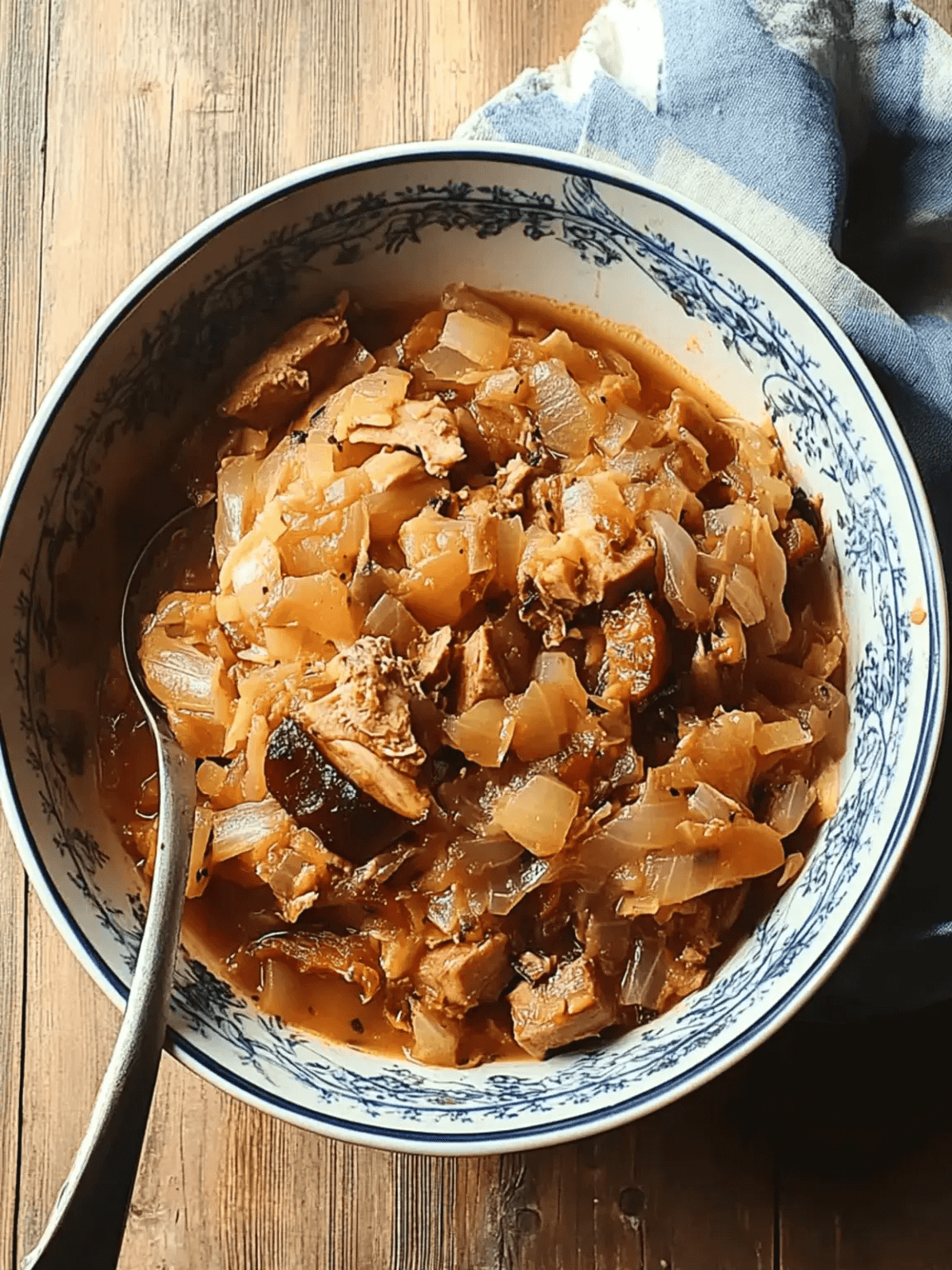
Savory Polish Bigos Stew for Cozy Nights
Ingredients
Method
- Prepare the meats and vegetables.
- Sauté the onion and garlic.
- Brown the pork and sausage.
- Incorporate the sauerkraut and fresh cabbage.
- Add broth, tomato paste, and spices.
- Simmer the stew.
- Adjust seasoning and serve.
Notes
Additional serving suggestions: pair with a crisp salad, garlic bread, or roasted seasonal vegetables for balance.
For make-ahead, prep components separately and assemble just before heating to preserve texture.
Taste and adjust with acid (lemon/vinegar) and salt right at the end to wake up flavors.